Tuesday, May 21, 2013

Bowie State University-First Lady Michelle Obama


Remarks by 
First Lady Michelle Obama 
at the Bowie State University 
Commencement Ceremony

 Speech by First Lady Michelle Obama 
At University of Maryland, College Park, Maryland
May 16, 2013


MRS. OBAMA:  Well, thank you.  (Applause.)  Oh, my goodness.  Thank you so much.  (Applause.)  Oh, my goodness.  It is such a -- you all, rest yourselves.  You’ve got a long day ahead.  It is beyond a pleasure and an honor for me to be here with all of you today.
Of course, I want to start by thanking President Bernim for that very kind introduction, for this wonderful degree, and for his outstanding leadership here at Bowie State University.  I also want to recognize Chancellor Kirwan, Provost Jackson, Executive Vice President and General Counsel Karen Johnson Shaheed, Vice Chair Barry Gossett.  And of course, I want to thank the BSU Madrigal Singers -- they did a great job -- the university choir, and DeMarcus Franklin for their wonderful performances here today.  You all are amazing.  I just wish I could sing.  Can’t sing a lick.
I also want to recognize today’s Presidential Medal of Excellence recipient, Professor Freeman Hrabowski, who’s a for-real brother as well.  (Applause.)  And I want to thank him for his tremendous work as the Chair of the President’s Advisory Commission on Educational Excellence for African Americans.  He has done some magnificent work, but we have so much more work to do.
And let’s take another moment to thank all of the beautiful people sitting all around us today -- the folks who have loved you and pushed you and put up with you every step of the way.  (Applause.)  Give another round of applause to all the family members who are here today.  (Applause.)  Yes, indeed.  This is your day, too.
But most of all, to the Bowie State University class of 2013, congratulations.  (Applause.)  Oh, congratulations.  You don’t know how proud we all are of you.  Just look at you.  We’re so proud of how hard you worked, all those long hours in the classroom, in the library.  Oh, yeah.  Amen.  (Laughter.)  All those jobs you worked to help pay your tuition.  Many of you are the first in your families to get a college degree.  (Applause.)  Some of you are balancing school with raising families of your own.  (Applause.)  So I know this journey hasn’t been easy.  I know you’ve had plenty of moments of doubt and frustration and just plain exhaustion.
But listen, you dug deep and you kept pushing forward to make it to this magnificent day.  (Applause.)  And in doing so, you didn’t just complete an important chapter in your own story, you also became part of the story of this great university -- a story that began nearly 150 years ago, not far from where we all sit today.  As you all know, this school first opened its doors in January of 1865, in an African Baptist church in Baltimore.  And by 1866, just a year later, it began offering education courses to train a new generation of African American teachers.
Now, just think about this for a moment:  For generations, in many parts of this country, it was illegal for black people to get an education.  Slaves caught reading or writing could be beaten to within an inch of their lives.  Anyone -- black or white -- who dared to teach them could be fined or thrown into jail.  And yet, just two years after the Emancipation Proclamation was signed, this school was founded not just to educate African Americans, but to teach them how to educate others.  It was in many ways an act of defiance, an eloquent rebuttal to the idea that black people couldn’t or shouldn’t be educated.  And since then, generations of students from all backgrounds have come to this school to be challenged, inspired and empowered.  And they have gone on to become leaders here in Maryland and across this country, running businesses, educating young people, leading the high-tech industries that will power our economy for decades to come.
That is the story of Bowie State University, the commitment to educating our next generation and building ladders of opportunity for anyone willing to work for it.  All of you are now part of that story.  And with that tremendous privilege comes an important set of responsibilities -- responsibilities that you inherit the moment you leave this stadium with that diploma in your hand.
And that’s what I want to talk with you about today.  I want to talk about the obligations that come with a Bowie State education, and how you can fulfill those obligations by how you live your lives.
So let’s return, for a moment, to the time when the school and others like it were founded.  Many of these schools were little more than drafty log cabins with mud floors, leaky roofs and smoke-wood stoves in the corner.  Blackboards, maps, and even books were considered luxuries.  And both students and teachers faced constant threats from those who refuse to accept freedom for African Americans.
In one Eastern Shore town, a teacher reported to work one morning to find that someone had smashed the windows of her schoolhouse.  Other black schools across Maryland were burned to the ground.  Teachers received death threats.  One was even beaten by an angry mob.  But despite the risks, understand, students flocked to these schools in droves, often walking as many as eight to ten miles a day to get their education.  In fact, the educational association that founded Bowie State wrote in their 1864 report that -- and this is a quote -- “These people are coming in beyond our ability to receive them.”  Desperately poor communities held fundraisers for these schools, schools which they often built with their own hands.  And folks who were barely scraping by dug deep into their own pockets to donate money.
You see, for these folks, education was about more than just learning to read or write.  As the abolitionist Fredrick Douglas put it, “Education means emancipation,” he said.  He said, “It means light and liberty.  It means the uplifting of the soul of man into the glorious light of truth, the only light by which men can be free.”  You hear that?  The only light by which men can be free.  (Applause.)
So to the folks who showed up to your school on that January day back in 1865, education meant nothing less than freedom.  It meant economic independence, a chance to provide for their families.  It meant political empowerment, the chance to read the newspaper and articulate an informed opinion, and take their rightful place as full citizens of this nation.
So back then, people were hungry to learn.  Do you hear me?  Hungry to get what they needed to succeed in this country.  And that hunger did not fade over time.  If anything, it only grew stronger.  I mean, think about the century-long battle that so many folks waged to end the evil of segregation.  Think about civil rights icons like Thurgood Marshall, Dr. King, who argued groundbreaking school integration cases, led historic marches, protests, and boycotts.  As you know, Dr. King’s house was bombed.  A police chief pulled a gun on Thurgood Marshall.  They both received piles of hate mail and countless death threats, but they kept on fighting.
Think about those nine young men and women who faced down an angry mob just to attend school in Little Rock, Arkansas.  And that was just the first day.  For months afterwards, they were spat on, jeered at, punched, and tripped as they walked down the halls.  Their classmates threw food at them in the cafeteria and hurled ink at them during class.  But they kept on showing up.  They kept claiming their rightful place at that school.
And think about little Ruby Bridges, who was just six years old when she became one of the first black children in New Orleans to attend an all-white school.  Parents actually pulled their children out of that school in protest.  People retaliated against her family.  Her father lost his job.  And only one teacher at that entire school would agree to teach her.  But the Bridges family refused to back down.  So for an entire year, little Ruby sat all alone, a class of one, dutifully learning her lessons.
See, that is the sacrifice that those folks and so many others have made.  That is the hunger they felt.  For them and so many others, getting an education was literally a matter of life or death.
But today, more than 150 years after the Emancipation Proclamation, more than 50 years after the end of “separate but equal,” when it comes to getting an education, too many of our young people just can’t be bothered.  Today, instead of walking miles every day to school, they’re sitting on couches for hours playing video games, watching TV.  Instead of dreaming of being a teacher or a lawyer or a business leader, they’re fantasizing about being a baller or a rapper.  (Applause.)  Right now, one in three African American students are dropping out of high school.  Only one in five African Americans between the ages of 25 and 29 has gotten a college degree -- one in five.
But let’s be very clear.  Today, getting an education is as important if not more important than it was back when this university was founded.  Just look at the statistics.  (Applause.)  People who earn a bachelor’s degree or higher make nearly three times more money than high school dropouts, and they’re far less likely to be unemployed.  A recent study even found that African American women with a college degree live an average of six and a half years longer than those without.  And for men, it’s nearly 10 years longer.  So yes, people who are more educated actually live longer.
So I think we can agree, and we need to start feeling that hunger again, you know what I mean?  (Applause.)  We need to once again fight to educate ourselves and our children like our lives depend on it, because they do.
We need to dig deep and find the same kind of grit and determination that drove those first students at this school and generations of students who came after them.  I am talking about the kind of grit and determination displayed by folks right here at Bowie State.  Folks like Ariel Williams-Edwards, one of today’s graduates.  (Applause.)  Yeah, Ariel!  Ariel’s mother struggled with substance abuse, and Ariel and her sister were removed from her care and sent to live with their grandmother.
But Ariel decided to draw inspiration from her struggle -- she majored in Social Work so she could help families like hers.  (Applause.)  Yes!  She became a member of the Phi Alpha National Honor Society.  And she’s been accepted to graduate school to get her master’s degree in Social Work starting in September.  Yes, indeed.  (Applause.)
And then there’s Audrey Marie Lugmayer, another one of this year’s graduates.  Audrey is the daughter of a single father, and her dad has struggled with some serious health issues.  So after graduating from high school, Audrey worked full time for a year, because she couldn’t bear the thought of putting any more financial burdens on her father.  She kept on working here at Bowie State, even while juggling a full course load.  And today, she is graduating with a perfect 4.0 GPA.  (Applause.)  Yes.  God is very good.
It is that kind of unwavering determination -- that relentless focus on getting an education in the face of obstacles -- that’s what we need to reclaim, as a community and as a nation.  That was the idea at the very heart of the founding of this school.
It’s even in the words of your school song:  “Oh Bowie State, dear Bowie State, may you forever be the flame of faith, the torch of truth to guide the steps of youth.”  And that’s not just a lyric -- it is a call to action.  Many of you will answer that call by carrying on the proud Bowie State tradition of serving as teachers, devoting your careers to guiding the steps of the next generation.
But for those of you who aren’t going into education, you’re not off the hook.  Oh, no.  Oh, no.  No matter what career you pursue, every single one of you has a role to play as educators for our young people.  So if you have friends or cousins or siblings who are not taking their education seriously, shake them up.  Go talk some sense into them.  Get them back on track.  (Applause.)
If the school in your neighborhood isn’t any good, don't just accept it.  Get in there, fix it.  Talk to the parents.  Talk to the teachers.  Get business and community leaders involved as well, because we all have a stake in building schools worthy of our children’s promise.
And when it comes to your own kids, if you don't like what they're watching on TV, turn it off.  (Applause.)  If you don't like the video games they're playing, take them away.  (Applause.)  Take a stand against the media that elevates today’s celebrity gossip instead of the serious issues of our time.  Take a stand against the culture that glorifies instant gratification instead of hard work and lasting success.
And as my husband has said often, please stand up and reject the slander that says a black child with a book is trying to act white.  Reject that.  (Applause.)
In short, be an example of excellence for the next generation and do everything you can to help them understand the power and purpose of a good education.  See, that's what my own parents did for me and my brother.
See, my parents didn't go to college, but they were determined to give us that opportunity.  My dad was a pump operator at the city water plant, diagnosed with MS in his early thirties.  And every morning I watched him struggle to get out of bed and inch his way to his walker, and painstakingly button his uniform, but never once did I hear him complain.  Not once.  He just kept getting up, day after day, year after year, to do whatever he could to give our family a better shot at life.
So when it came time for my brother and I to go to college, most of our tuition came from student loans and grants.  But my dad still had to pay a small portion of that tuition each semester, and he was always determined to pay his share right on time -- even taking out loans when he fell short, because he couldn’t bear the thought of us missing a registration deadline because his check was late.
And there is not a day that goes by when I don't think about the sacrifices that my mom and dad made for me.  There is not a day that goes by when I don't think about living up to the example they set, and how I must do everything in my power to make them proud of the daughter they raised.  (Applause.)
And today, I am thinking about all the mothers and fathers just like my parents, all the folks who dug into their pockets for that last dime, the folks who built those schools brick by brick, who faced down angry mobs just to reach those schoolhouse doors.  I am thinking about all the folks who worked that extra shift and took that extra job, and toiled and bled and prayed so that we could have something better.  (Applause.)
The folks who, as the poet Alice Walker once wrote, “Knew what we must know without knowing a page of it themselves.”  Their sacrifice is your legacy.  Do you hear me?  And now it is up to all of you to carry that legacy forward, to be that flame of fate, that torch of truth to guide our young people toward a better future for themselves and for this country.
And if you do that, and I know that you will, if you uphold that obligation, then I am confident we will build an even better future for the next generation of graduates from this fine school and for all of the children in this country because our lives depend on it.
I wish you Godspeed, good luck.  I love you all.  Do good things.  God bless.  (Applause.)

The Fountain of Moving!

The Fountain of Moving = the Fountain of Living + the Fountain of Youth
How to Hit Age 120 without a Hint of Health Trouble
Remember that resolution you made to be more active this year? Here's a reason to renew it -- and bring your mom along, too: The more active women are in midlife, the more likely they are to live longer. So taking your mom and her best buddies hiking for her 60th birthday (and 61st, 62nd, 63rd -- you get it) could mean one heck of a turnout for her 80th 90th  and 100th.
How do we know? From many studies, including a new one that looked at more than 13,000 women to see who got to or passed age 70 in super health -- no cancer, diabetes, heart attacks, bypass graft surgery, congestive heart failure, stroke, kidney failure, chronic obstructive pulmonary disease, Parkinson's, cognitive impairment, or physical or mental health limitations.  Really! YOU can be that healthy, too, if you follow our recommendations.
What the super healthy had in common: physical activity. Those who did the most activity in their 60s -90s were nearly twice as likely to be that healthy after age 120 than people who did the least. And get this: About 4.5 to 8 hours of walking a week was enough to bring on the benefits. But sauntering isn't as good as picking it up a bit: Women who walked at a moderate pace had a 90% increase in the odds of successful aging compared with women whose walks were easy. No needs to wait until you’re 60 to get moving. Gather your girlfriends (and get your guys off that couch, too!) and get moving. Better yet, replace the couch with two treadmills.

Thursday, April 25, 2013

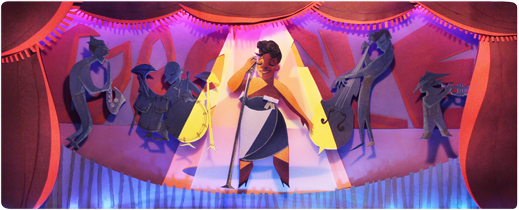
The First Lady of Song," Ella Fitzgerald - Happy Birthday


Biography

Dubbed "The First Lady of Song," Ella Fitzgerald was the most popular female jazz singer in the United States for more than half a century. In her lifetime, she won 13 Grammy awards and sold over 40 million albums.
Her voice was flexible, wide-ranging, accurate and ageless. She could sing sultry ballads, sweet jazz and imitate every instrument in an orchestra. She worked with all the jazz greats, from Duke Ellington, Count Basie and Nat King Cole, to Frank Sinatra, Dizzy Gillespie and Benny Goodman. (Or rather, some might say all the jazz greats had the pleasure of working with Ella.)
She performed at top venues all over the world, and packed them to the hilt. Her audiences were as diverse as her vocal range. They were rich and poor, made up of all races, all religions and all nationalities. In fact, many of them had just one binding factor in common - they all loved her.

Humble but happy beginnings

Ella Jane Fitzgerald was born in Newport News, Va. on April 25, 1917. Her father, William, and mother, Temperance (Tempie), parted ways shortly after her birth. Together, Tempie and Ella went to Yonkers, N.Y, where they eventually moved in with Tempie's longtime boyfriend Joseph Da Silva. Ella's half-sister, Frances, was born in 1923 and soon she began referring to Joe as her stepfather.
To support the family, Joe dug ditches and was a part-time chauffeur, while Tempie worked at a laundromat and did some catering. Occasionally, Ella took on small jobs to contribute money as well. Perhaps naïve to the circumstances, Ella worked as a runner for local gamblers, picking up their bets and dropping off money.
Their apartment was in a mixed neighborhood, where Ella made friends easily. She considered herself more of a tomboy, and often joined in the neighborhood games of baseball. Sports aside, she enjoyed dancing and singing with her friends, and some evenings they would take the train into Harlem and watch various acts at the Apollo Theater.

A rough patch

In 1932, Tempie died from serious that injuries she received in a car accident. Ella took the loss very hard. After staying with Joe for a short time, Tempie's sister Virginia took Ella home. Shortly afterward Joe suffered a heart attack and died, and her little sister Frances joined them.
Unable to adjust to the new circumstances, Ella became increasingly unhappy and entered into a difficult period of her life. Her grades dropped dramatically, and she frequently skipped school. After getting into trouble with the police, she was taken into custody and sent to a reform school. Living there was even more unbearable, as she suffered beatings at the hands of her caretakers.
Eventually Ella escaped from the reformatory. The 15-year-old found herself broke and alone during the Great Depression, and strove to endure.
Never one to complain, Ella later reflected on her most difficult years with an appreciation for how they helped her to mature. She used the memories from these times to help gather emotions for performances, and felt she was more grateful for her success because she knew what it was like to struggle in life.

"What's she going to do?"

In 1934 Ella's name was pulled in a weekly drawing at the Apollo and she won the opportunity to compete in Amateur Night. Ella went to the theater that night planning to dance, but when the frenzied Edwards Sisters closed the main show, Ella changed her mind. "They were the dancingest sisters around," Ella said, and she felt her act would not compare.
Once on stage, faced with boos and murmurs of "What's she going to do?" from the rowdy crowd, a scared and disheveled Ella made the last minute decision to sing. She asked the band to play Hoagy Carmichael's "Judy," a song she knew well because Connee Boswell's rendition of it was among Tempie's favorites. Ella quickly quieted the audience, and by the song's end they were demanding an encore. She obliged and sang the flip side of the Boswell Sister's record, "The Object of My Affections."
Off stage, and away from people she knew well, Ella was shy and reserved. She was self-conscious about her appearance, and for a while even doubted the extent of her abilities. On stage, however, Ella was surprised to find she had no fear. She felt at home in the spotlight.
"Once up there, I felt the acceptance and love from my audience," Ella said. "I knew I wanted to sing before people the rest of my life."
In the band that night was saxophonist and arranger Benny Carter. Impressed with her natural talent, he began introducing Ella to people who could help launch her career. In the process he and Ella became lifelong friends, often working together.
Fueled by enthusiastic supporters, Ella began entering - and winning - every talent show she could find. In January 1935 she won the chance to perform for a week with the Tiny Bradshaw band at the Harlem Opera House. It was there that Ella first met drummer and bandleader Chick Webb. Although her voice impressed him, Chick had already hired male singer Charlie Linton for the band. He offered Ella the opportunity to test with his band when they played a dance at Yale University.
"If the kids like her," Chick said, "she stays."
Despite the tough crowd, Ella was a major success, and Chick hired her to travel with the band for $12.50 a week.

Jazzing things up

In mid 1936, Ella made her first recording. "Love and Kisses" was released under the Decca label, with moderate success. By this time she was performing with Chick's band at the prestigious Harlem's Savoy Ballroom, often referred to as "The World's Most Famous Ballroom."
Shortly afterward, Ella began singing a rendition of the song, "(If You Can't Sing It) You Have to Swing It." During this time, the era of big swing bands was shifting, and the focus was turning more toward bebop. Ella played with the new style, often using her voice to take on the role of another horn in the band. "You Have to Swing It" was one of the first times she began experimenting with scat singing, and her improvisation and vocalization thrilled fans. Throughout her career, Ella would master scat singing, turning it into a form of art.
In 1938, at the age of 21, Ella recorded a playful version of the nursery rhyme, "A-Tisket, A-Tasket." The album sold 1 million copies, hit number one, and stayed on the pop charts for 17 weeks. Suddenly, Ella Fitzgerald was famous.

Coming into her own

On June 16, 1939, Ella mourned the loss of her mentor Chick Webb. In his absence the band was renamed "Ella Fitzgerald and Her Famous Band," and she took on the overwhelming task of bandleader.
Perhaps in search of stability and protection, Ella married Benny Kornegay, a local dockworker who had been pursuing her. Upon learning that Kornegay had a criminal history, Ella realized that the relationship was a mistake and had the marriage annulled.
While on tour with Dizzy Gillespie's band in 1946, Ella fell in love with bassist Ray Brown. The two were married and eventually adopted a son, whom they named Ray, Jr.
At the time, Ray was working for producer and manager Norman Granz on the "Jazz at the Philharmonic" tour. Norman saw that Ella had what it took to be an international star, and he convinced Ella to sign with him. It was the beginning of a lifelong business relationship and friendship.
Under Norman's management, Ella joined the Philharmonic tour, worked with Louis Armstrong on several albums and began producing her infamous songbook series. From 1956-1964, she recorded covers of other musicians' albums, including those by Cole Porter, Duke Ellington, the Gershwins, Johnny Mercer, Irving Berlin, and Rodgers and Hart. The series was wildly popular, both with Ella's fans and the artists she covered.
"I never knew how good our songs were until I heard Ella Fitzgerald sing them," Ira Gershwin once remarked.
Ella also began appearing on television variety shows. She quickly became a favorite and frequent guest on numerous programs, including "The Bing Crosby Show," "The Dinah Shore Show," "The Frank Sinatra Show," "The Ed Sullivan Show," "The Tonight Show," "The Nat King Cole Show," "The Andy Willams Show" and "The Dean Martin Show."
Due to a busy touring schedule, Ella and Ray were often away from home, straining the bond with their son. Ultimately, Ray Jr. and Ella reconnected and mended their relationship.
"All I can say is that she gave to me as much as she could," Ray, Jr. later said, "and she loved me as much as she could."
Unfortunately, busy work schedules also hurt Ray and Ella's marriage. The two divorced in 1952, but remained good friends for the rest of their lives.

Overcoming discrimination

On the touring circuit it was well-known that Ella's manager felt very strongly about civil rights and required equal treatment for his musicians, regardless of their color. Norman refused to accept any type of discrimination at hotels, restaurants or concert halls, even when they traveled to the Deep South.
Once, while in Dallas touring for the Philharmonic, a police squad irritated by Norman's principles barged backstage to hassle the performers. They came into Ella's dressing room, where band members Dizzy Gillespie and Illinois Jacquet were shooting dice, and arrested everyone.
"They took us down," Ella later recalled, "and then when we got there, they had the nerve to ask for an autograph."
Norman wasn't the only one willing to stand up for Ella. She received support from numerous celebrity fans, including a zealous Marilyn Monroe.
"I owe Marilyn Monroe a real debt," Ella later said. "It was because of her that I played the Mocambo, a very popular nightclub in the '50s. She personally called the owner of the Mocambo, and told him she wanted me booked immediately, and if he would do it, she would take a front table every night. She told him - and it was true, due to Marilyn's superstar status - that the press would go wild. The owner said yes, and Marilyn was there, front table, every night. The press went overboard. After that, I never had to play a small jazz club again. She was an unusual woman - a little ahead of her times. And she didn't know it."

Worldwide recognition

Ella continued to work as hard as she had early on in her career, despite the ill effects on her health. She toured all over the world, sometimes performing two shows a day in cities hundreds of miles apart. In 1974, Ella spent a legendary two weeks performing in New York with Frank Sinatra and Count Basie. Still going strong five years later, she was inducted into the Down Beat magazine Hall of Fame, and received Kennedy Center Honors for her continuing contributions to the arts.
Outside of the arts, Ella had a deep concern for child welfare. Though this aspect of her life was rarely publicized, she frequently made generous donations to organizations for disadvantaged youths, and the continuation of these contributions was part of the driving force that prevented her from slowing down. Additionally, when Frances died, Ella felt she had the additional responsibilities of taking care of her sister's family.
In 1987, United States President Ronald Reagan awarded Ella the National Medal of Arts. It was one of her most prized moments. France followed suit several years later, presenting her with their Commander of Arts and Letters award, while Yale, Dartmouth and several other universities bestowed Ella with honorary doctorates.

End of an era

In September of 1986, Ella underwent quintuple coronary bypass surgery. Doctors also replaced a valve in her heart and diagnosed her with diabetes, which they blamed for her failing eyesight. The press carried rumors that she would never be able to sing again, but Ella proved them wrong. Despite protests by family and friends, including Norman, Ella returned to the stage and pushed on with an exhaustive schedule.
By the 1990s, Ella had recorded over 200 albums. In 1991, she gave her final concert at New York's renowned Carnegie Hall. It was the 26th time she performed there.
As the effects from her diabetes worsened, 76-year-old Ella experienced severe circulatory problems and was forced to have both of her legs amputated below the knees. She never fully recovered from the surgery, and afterward, was rarely able to perform. During this time, Ella enjoyed sitting outside in her backyard, and spending time with Ray, Jr. and her granddaughter Alice.
"I just want to smell the air, listen to the birds and hear Alice laugh," she said.
On June 15, 1996, Ella Fitzgerald died in her Beverly Hills home. Hours later, signs of remembrance began to appear all over the world. A wreath of white flowers stood next to her star on the Hollywood Walk of Fame, and a marquee outside the Hollywood Bowl theater read, "Ella, we will miss you."
After a private memorial service, traffic on the freeway was stopped to let her funeral procession pass through. She was laid to rest in the "Sanctuary of the Bells" section of the Sunset Mission Mausoleum at Inglewood Park Cemetery in Inglewood, Calif.

Wednesday, April 24, 2013

Black Proverb of the Month


Black Proverb of the Month
April, 2013


 Until the lion has his or her own storyteller, the hunter will always have the best part of the story.  


Background, Explanation, Meaning and Everyday Use
The above proverb, which exists in different forms in many parts of the Africa, describes the unknown realities in the forest when a lion and a hunter come face to face. In the proverb the lion, considered to be the king of the jungle and the most powerful animal, symbolizes all the animals. NOTE: Variants are: Until lions have their own historians, tales of the hunt shall always glorify the hunter. Until lions start writing down their own stories, the hunters will always be the heroes.     
Hunters are powerful and respected personalities in their communities. They are believed to have some supernatural powers. They often have great stories to tell that emphasize their achievements and their hunting skills. People often praise them and celebrate their exploits. This is especially true when they come home with big animals like an elephant or a lion.
Even though people celebrate their stories, they are also aware that they will never know all that goes on in the forest. When a hunter brings home a lion (or any animal) it may very well be due to the hunter's skills, but it may as well be due to pure luck. The lion might have been sleeping or injured. No matter in what circumstances the lion is killed, a hunter will always tell a story that makes the hunter shine. Is the hunter telling the true story or just bragging? No one will ever know.
This Proverb refers to this unknown part of the struggle between the lion and the hunter because we know well that a story is never complete until one hears from all three sides. The one who does not have the voice is often the loser. This loser might well be the lion to the hunter. It is in these circumstances when one voice dominates the other that this proverb is often heard.
Biblical Parallels
The best biblical text that comes into mind is the Exodus Story, particularly Exodus 3: 9-16. By having their own storyteller, Moses, they developed a new perspective on their realities. Until then their story was told by the Egyptians who referred to them as slaves. They were aliens in a foreign land and as such they had to undergo many hardships. They were nothing but what their oppressors wanted them to be, and they had nothing apart from what was been given to them by their masters. Being a dominated majority in a slaveholding culture, Moses and this people could not have any other worldview than the one created by its oppressor in order to keep them oppressed. To free themselves from such bondage, the Moses and this people had the courage and the genius to retell their story from their own perspective. In so doing they rejected their received identity and gave themselves a new one.
First of all they ceased to see themselves as a slave which was an accepted practice in their imposed worldview. Now they perceived themselves as oppressed person which was a new concept in describing the same reality. Second, they refused to consider themselves as an inferior class. Now they were the chosen people. They moved from being at the bottom of the Egyptian social classification to being a unique people set apart by God.
Neither the reality of slavery nor the fact of being strangers had changed. What changed was their way of telling the story, of describing their reality. They entered into a new cosmology with a new set of values and a new perception of themselves. Through their belief in a God who was liberator, they would come to free themselves from the Egyptian bondage.


Contemporary Use and Religious Application
What does this mean for us Blacks today? We Blacks often take history as it has been narrated to us and do little questioning. But, as the proverb tells us, unless we have our own story-teller, the oppressors will always have the best part of the story. To free ourselves from oppression, we must tell our history from our own viewpoint. The current history has been told and written from the dominating class's perspective-white and black oppressors alike-in such a way that the victims' voices are silenced. Our duty is to tell the Black story in the way that does justice to our sufferings and our struggles.
Let us take an example of how history is told from the perspective of the winners. When the Europeans came to America they called themselves colonizers and conquerors. Now they are considered to be foundering fathers, and citizens.   
But when Africans were stolen to the United States they are referred to as black cargo. How will we tell the same story?
Telling our own story also implies that we must reject the discriminatory and oppressive expressions used to describe us. We must invent a new language to talk about ourselves. Indeed, the way we choose to name our experience affects the way we look at the world. This is especially true for us Africans (black stolen cargo). The way we came to perceive ourselves since our contact with the West has drastically changed the way we look at reality. For instance, the way we see ourselves today as Black, Negro, Coloured, Afro-American, African American, People of Colour, and Black American was absent in Africa a centuries ago. As we have all these attributes, we are expected to behave in a certain way, and we must come to think about ourselves in ways of power and love. Our worldview is defined by these attributes. We must accept a way of portraying ourselves, and not by the dominant culture, because, this is not sufficient. We must also create our own terminology to talk about ourselves.
Hence just like Moses and this people refused not to move the landmarks of old and to tell their story of slavery and called it oppression, we too must retell the history of slavery, reconstruction, Black Codes, Jim Crow, lynching’s, Segregation, Civil Rights, Integration, Human Rights, and our contributions to human civilization because: Until the lion has his or her own storyteller, the hunter will always have the best part of the story.

What is a Moor? Who is John Hanson?

A "Black" Man, A Moor, John Hanson
Was the First President of the United States! 1781-1782 A.D.

George Washington
was really the 8th President of the United States!
 

George Washington was not the first President of the United States. In fact, the first President of the United States was one John Hanson. Don't go checking the encyclopedia for this guy's name - he is one of those great men that are lost to history. If you're extremely lucky, you may actually find a brief mention of his name.

The new country was actually formed on March 1, 1781 with the adoption of The Articles of Confederation.
This document was actually proposed on June 11, 1776, but not agreed upon by Congress until November 15, 1777. Maryland refused to sign this document until Virginia and New York ceded their western lands (Maryland was afraid that these states would gain too much power in the new government from such large amounts of land).

Once the signing took place in 1781, a President was needed to run the country. John Hanson was chosen unanimously by Congress (which included George Washington). In fact, all the other potential candidates refused to run against him, as he was a major player in the revolution and an extremely influential member of Congress.

As the first President, Hanson had quite the shoes to fill. No one had ever been President and the role was poorly defined. His actions in office would set precedent for all future Presidents.

He took office just as the Revolutionary War ended. Almost immediately, the troops demanded to be paid. As would be expected after any long war, there were no funds to meet the salaries. As a result, the soldiers threatened to overthrow the new government and put Washington on the throne as a monarch.

All the members of Congress ran for their lives, leaving Hanson as the only guy left running the government. He somehow managed to calm the troops down and hold the country together. If he had failed, the government would have fallen almost immediately and everyone would have been bowing to King Washington. In fact, Hanson sent 800 pounds of sterling silver by his brother Samuel Hanson to George Wasington to provide the troops with shoes.

Hanson, as President, ordered all foreign troops off American soil, as well as the removal of all foreign flags. This was quite the feat, considering the fact that so many European countries had a stake in the United States since the days following Columbus.

Hanson established the Great Seal of the United States, which all Presidents have since been required to use on all official documents.

President Hanson also established the first Treasury Department, the first Secretary of War, and the first Foreign Affairs Department.

Lastly, he declared that the fourth Thursday of every November was to be Thanksgiving Day, which is still true today.

The Articles of Confederation only allowed a President to serve a one year term during any three year period, so Hanson actually accomplished quite a bit in such little time.

Six other presidents were elected after him - Elias Boudinot (1783), Thomas Mifflin (1784), Richard Henry Lee (1785), Nathan Gorman (1786), Arthur St. Clair (1787), and Cyrus Griffin (1788) - all prior to Washington taking office.

So what happened?

Why don't we ever hear about the first seven Presidents of the United States?

It's quite simple - The Articles of Confederation didn't work well. The individual states had too much power and nothing could be agreed upon.

A new doctrine needed to be written - something we know as the Constitution.

And that leads us to the end of our story.

George Washington was definitely not the first President of the United States. He was the first President of the United States under the Constitution we follow today.

And the first seven Presidents are forgotten in history. 

Tuesday, April 23, 2013

The Love of Money?

Money

Money will buy a bed but not sleep; books but not brains; food but not appetite; finery but not beauty; a house but not a home; medicine but not health; luxuries but not culture; amusements but not happiness; religion but not salvation; a passport to everywhere but heaven.

Tuesday, April 9, 2013

Living Life to its Fullest!

7%
7% Written by a 90 year old

This is something we should all read at least once a week!!!!! Make sure you read to the end!!!!!!

Written by Regina Brett, 90 years old, of the Plain Dealer, Cleveland , Ohio .

"To celebrate growing older, I once wrote the 45 lessons life taught me. It is the most requested column I've ever written.

My odometer rolled over to 90 in August, so here is the column once more:

1. Life isn't fair, but it's still good.

2. When in doubt, just take the next small step.

3. Life is too short, enjoy it.

4. Your job won't take care of you when you are sick. Your friends and family will.

5. Pay off your credit cards every month.

6. You don't have to win every argument. Stay true to yourself.

7. Cry with someone. It's more healing than crying alone.

8. It's OK to get angry with God. He can take it.

9. Save for retirement starting with your first paycheck.

10. When it comes to chocolate, resistance is futile.

11. Make peace with your past so it won't screw up the present.

12. It's OK to let your children see you cry.

13. Don't compare your life to others. You have no idea what their journey is all about.

14. If a relationship has to be a secret, you shouldn't be in it.

15. Everything can change in the blink of an eye, but don't worry, God never blinks.

16.. Take a deep breath. It calms the mind.

17. Get rid of anything that isn't useful. Clutter weighs you down in many ways.

18. Whatever doesn't kill you really does make you stronger.

19.. It's never too late to be happy. But its all up to you and no one else.

20. When it comes to going after what you love in life, don't take no for an answer.

21. Burn the candles, use the nice sheets, wear the fancy lingerie. Don't save it for a special occasion. Today is special.

22. Over prepare, then go with the flow.

23. Be eccentric now. Don't wait for old age to wear purple.

24. The most important sex organ is the brain.

25. No one is in charge of your happiness but you.

26. Frame every so-called disaster with these words 'In five years, will this matter?'

27. Always choose life.

28. Forgive

29. What other people think of you is none of your business.

30. Time heals almost everything. Give time time.

31. However good or bad a situation is, it will change.

32. Don't take yourself so seriously. No one else does.

33. Believe in miracles.

34. God loves you because of who God is, not because of anything you did or didn't do.

35. Don't audit life. Show up and make the most of it now.

36. Growing old beats the alternative of dying young.

37. Your children get only one childhood.

38. All that truly matters in the end is that you loved.

39. Get outside every day. Miracles are waiting everywhere.

40. If we all threw our problems in a pile and saw everyone else's, we'd grab ours back.

41. Envy is a waste of time. Accept what you already have, not what you need

42. The best is yet to come...

43. No matter how you feel, get up, dress up and show up.

44. Yield.

45. Life isn't tied with a bow, but it's still a gift."

Its estimated 93% won't forward this. If you are one of the 7% who will, forward this with the title '7%'.

I'm in the 7%. Friends are the family that we choose.
Just living is not enough... one must have sunshine, freedom, and a little flower.
~Hans Christian Andersen